
Date: Friday, October 17, 2025
Victoria, B.C. – Heart disease remains one of the top three causes of injury and death among police officers in Canada, but it's not clear yet whether their protective gear makes it harder for them to receive effective CPR when needed.
The Victoria Police Department (VicPD) is collaborating with medical experts from the University of British Columbia (UBC) and Island Health on a first-of-its-kind study examining how protective police body armour impacts the effectiveness of CPR on officers during emergencies. This research aims to enhance officer safety and improve emergency medical response.
VicPD’s Medical Director, Dr. Mark Vu, recently co-led the “Tactical CPR” study with Dr. Christopher Hung, an anesthesiologist from St. John’s, N.L., to examine how body armour affects CPR performance.
More than 70 VicPD officers participated in performing CPR on a specialized research manikin wearing standard police body armour. Participants delivered three rounds of CPR, each lasting roughly two minutes. Researchers measured performance with and without ballistic plates. The research manikin is capable of objectively assessing key CPR elements.
The results, which will be published in the coming months, will help improve CPR training for police forces across Canada and enhance emergency medical support programs - making them safer, more effective and better adapted to the realities of frontline policing.
This initiative is part of VicPD’s commitment to achieving organizational excellence through evidence-based training and investment in officer wellness. It also supports community safety by strengthening frontline emergency response capabilities.
“We’re proud to partner with Island Health and UBC on research that benefits not only police officers, but anyone who depends on first responders in a medical emergency,” said Chief Constable Fiona Wilson. “This collaboration underscores VicPD’s commitment to evidence-based policing and to ensuring that our officers have the safest possible working conditions. By contributing to research that could improve life-saving interventions, we’re helping strengthen emergency response both within policing and across the broader community.”
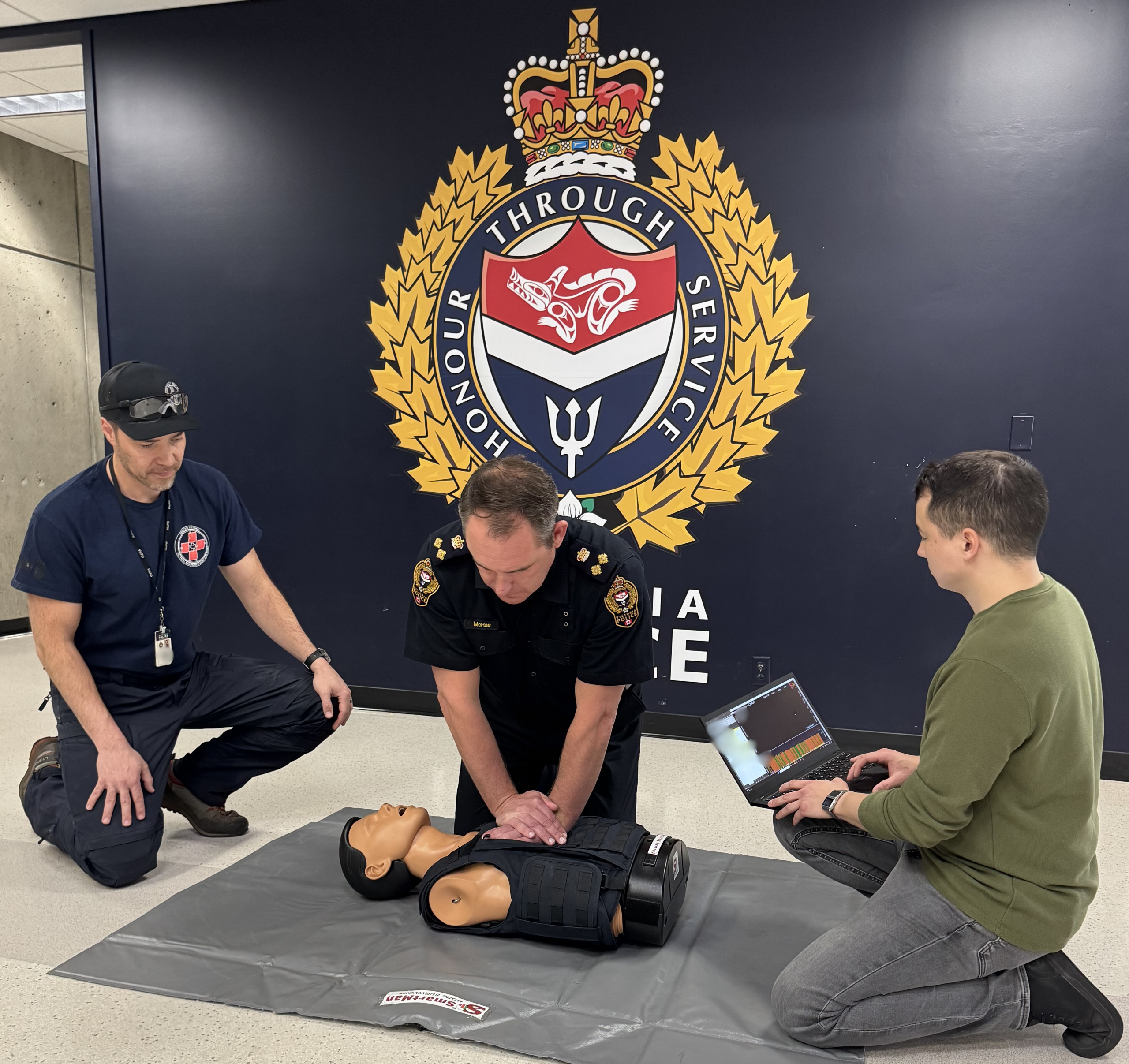
VicPD Deputy Chief Jamie McRae (centre) takes part in an innovative research study assessing the challenges body armour presents to effective CPR delivery on police officers experiencing medical emergencies. Also pictured are Dr. Mark Vu (left) and Dr. Christopher Hung (right).
All VicPD officers are trained in cardiopulmonary resuscitation (CPR), automated external defibrillation (AED), and tactical first aid, with refresher training every two to three years. In Canada, training standards vary by department.
Dr. Mark Vu is a clinical assistant professor at UBC in anesthesiology, pharmacology and therapeutics, bringing valuable expertise to this collaborative effort.
Island Health has approved the study through its Operational Review Board. UBC has also approved it through its Research Ethics Board.
-30-